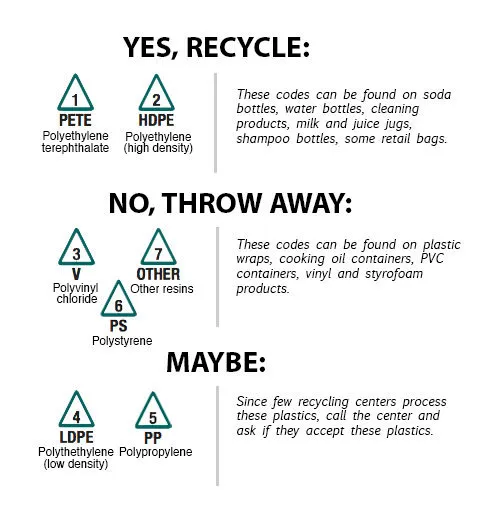
Safe Plastic Numbers Chart . For full functionality of this site it is necessary to enable javascript. Consider switching to glass storage containers since plastic containers.
Understanding What The Numbers On Plastic Bottles Mean from packagingoptionsdirect.com
Each number identifies the composition and recyclable characteristics of the respective plastic packaging material. When possible it’s best to avoid #7 plastics, especially for children’s food. They aren’t processed with bisphenols or phthalates, and these are considered to be safe.
Understanding What The Numbers On Plastic Bottles Mean
A product made of plastic is often stamped with a resin code, which is a number between one and seven inside a small triangle made of arrows. Ldpe (low density polyethylene) plastic #5: The recycling codes — a.k.a. Here are the instructions how to enable javascript in your web browser.
Source: www.polaver.com
Ideally, we shouldn’t even be putting plastic into the dishwasher. Ldpe (low density polyethylene) plastic #5: Those little numbers inside the triangle made with arrows most often found on the bottom of a plastic product — designate which plastics are more toxic and which are safer. Only use plastic containers with the recycling #1, #2, #4 and #5 for food.
Source: www.pinterest.com
Here are the instructions how to enable javascript in your web browser. They also biodegrade, so they’re a better environmental choice as well. The common 5 gallon bucket. Only use plastic containers with the recycling #1, #2, #4 and #5 for food storage. The recycling codes — a.k.a.
Source: arewaterbottlessafeornot.wordpress.com
Some food grade buckets or containers will include a cup & fork symbol as an indicator. Consider switching to glass storage containers since plastic containers. This type of plastic is found in milk jugs, laundry detergent bottles. They also biodegrade, so they’re a better environmental choice as well. Even if it has the “microwave safe” label on it.
Source: www.glutathionediseasecure.com
I get that question all the time. A product made of plastic is often stamped with a resin code, which is a number between one and seven inside a small triangle made of arrows. An easy way to determine if a certain plastic container is safe for the microwave is to look for the special “microwave safe ” symbol. If.
Source: www.state.nj.us
This is the thin, clear plastic used for bottled water, soda, juices, condiments, etc. The symbol with microwave and wavy lines indicates that particular cookware is safe to be put inside the microwave. Ldpe (low density polyethylene) plastic #5: However, you should also study the issue for yourself, and decide. The internet is full of charts listing the numbers of.
Source: www.almanac.com
This number will be between 1 and 7 and will be stamped inside a triangle of arrows. Only use plastic containers with the recycling #1, #2, #4 and #5 for food storage. By avoiding plastics with codes 3, 6, or 7. Ideally, we shouldn’t even be putting plastic into the dishwasher. • select safe plastics for food storage.
Source: foodprint.org
Here are the instructions how to enable javascript in your web browser. Plastics with the recycling labels #1, #2 and #4 on rock bottom are safer choices and don’t contain bpa. Does that mean the lid on my travel mug is safe? Some food grade buckets or containers will include a cup & fork symbol as an indicator. Plastics that.
Source: hackforums.net
You can largely avoid plastics containing bpa by reading labels, and limit your possible exposure to bpa by changing some product choices and habits. They also biodegrade, so they’re a better environmental choice as well. If the triangle has the number '1' inside it, the plastic used to manufacture that bottle is made of polyethylene terephthalate (pet). The flimsier the.
Source: alansfactoryoutlet.com
Plastics with the recycling labels #1, #2 and #4 on rock bottom are safer choices and don’t contain bpa. They also biodegrade, so they’re a better environmental choice as well. #7 plastics aren’t for reuse, unless they need the pla compostable coding. Not all plastic is recyclable. The internet is full of charts listing the numbers of the various types.
Source: lsintspl3.wgbh.org
You can largely avoid plastics containing bpa by reading labels, and limit your possible exposure to bpa by changing some product choices and habits. As a general rule, the numbers that are safe for use with food are 1, 2, 4, and 5. The recycling codes — a.k.a. Supposedly, #2 (high density polyethylene), #4 (low density polyethylene), and #5 (polypropylene).
Source: www.huffpost.com
Consider switching to glass storage containers since plastic containers. Plastics with this number are also picked up by most curbside programs and can be recycled into many kinds of goods. Some food grade buckets or containers will include a cup & fork symbol as an indicator. They aren’t processed with bisphenols or phthalates, and these are considered to be safe..
Source: steemit.com
This number will be between 1 and 7 and will be stamped inside a triangle of arrows. Those little numbers inside the triangle made with arrows most often found on the bottom of a plastic product — designate which plastics are more toxic and which are safer. Plastics with this number are also picked up by most curbside programs and.
Source: www.hellonaturalliving.com
However, you should also study the issue for yourself, and decide. Plastics with this number are also picked up by most curbside programs and can be recycled into many kinds of goods. An easy way to determine if a certain plastic container is safe for the microwave is to look for the special “microwave safe ” symbol. #6 polystyrene (ps).
Source: greenbabydeals.com
This number will be between 1 and 7 and will be stamped inside a triangle of arrows. Pla plastics are bio plastics, made from polylactic acid, from starchy renewable resources like corn, and tapioca. They’re made of #2 hdpe. (for extra credit, bole also suggested not. With the help of resin codes, you can easily segregate recyclable materials.
Source: www.pinterest.com
Due to the risk of contamination, however, it’s not safe to reuse an hdpe bottle as a food or drink container if it didn’t originally contain some kind of edible substance. Plastics with this number are also picked up by most curbside programs and can be recycled into many kinds of goods. Pla plastics are bio plastics, made from polylactic.
Source: kellythekitchenkop.com
Consider switching to glass storage containers since plastic containers. When possible it’s best to avoid #7 plastics, especially for children’s food. Some food grade buckets or containers will include a cup & fork symbol as an indicator. #6 polystyrene (ps) likely will leach styrene—which is another possible endocrine disruptor and probable human carcinogen—into your drink or food. They’re made of.
Source: www.state.nj.us
This type of plastic is found in milk jugs, laundry detergent bottles. The flimsier the plastic feels, the worse it is to pop it into a microwave. 7, the “miscellaneous” category, is usually a mixture of plastics. If the bucket is considered ‘food grade’ it is typically marketed as such and labeled “food grade”, “food safe”, etc. As a general.
Source: packagingoptionsdirect.com
Here are some of the most common number 7 plastic: Supposedly, #2 (high density polyethylene), #4 (low density polyethylene), and #5 (polypropylene) are safe, right? As a general rule, the numbers that are safe for use with food are 1, 2, 4, and 5. The common 5 gallon bucket. • select safe plastics for food storage.
Source: learn.eartheasy.com
They also biodegrade, so they’re a better environmental choice as well. (for extra credit, bole also suggested not. Consider switching to glass storage containers since plastic containers. Here are some of the most common number 7 plastic: Look for fda approved symbol.
Source: bodyunburdened.com
#7 plastics aren’t for reuse, unless they need the pla compostable coding. They also biodegrade, so they’re a better environmental choice as well. Due to the risk of contamination, however, it’s not safe to reuse an hdpe bottle as a food or drink container if it didn’t originally contain some kind of edible substance. Each number identifies the composition and.