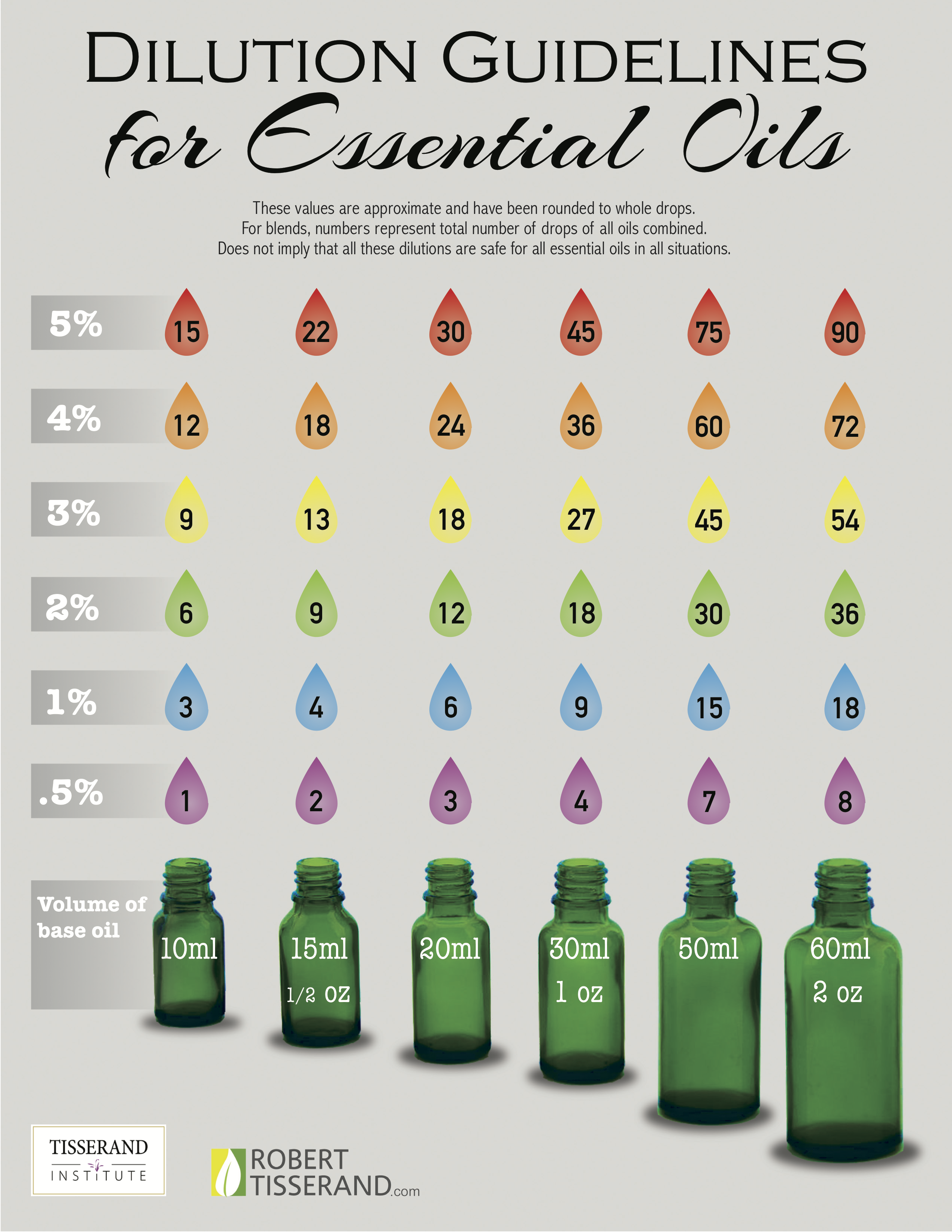
Essential Oils Dilution Chart . 10 rows essential oil dilution for the face. So, let’s say you mix lavender oil and coconut oil in a 1% dilution.
Three Reasons To Consider Diluting Essential Oils - Live Oak Acupuncture from www.liveoakacupuncture.com
The general guidelines for applying essential oils on the skin are as follows: If you wanted a 3% dilution, use about 3 tsp of carrier oil. As we saw in the essential oil dilution chart, a.
Three Reasons To Consider Diluting Essential Oils - Live Oak Acupuncture
Using the chart provided you can see that a 20% dilution for a 10ml bottle requires 40 drops of essential oils. Now it’s time to talk about the most critical aspect of essential oil dilution: Essential oils require dilution for topical usage. Clove bud oil should be used at no more than 0.5%.
Source: www.pinterest.com
Place the bottles next to each and take a sniff to an idea of the aromatherapy blend you could create. The calculator below will help you determine a starting point for the dilution rates to use in your blends. Grapefruit oil can be used at up to 4%. 5% is only recommended for. Diluting essential oils in appropriate levels for.
Source: blog.mountainroseherbs.com
This equates to 3 to 12 drops per. A 1% dilution is ideal for: The following chart is a guide you can use to help you dilute your essential oils into your favorite carrier oil. Since essential oils are concentrated, a little can go a long way. Be sure to get our free printable dilution chart cheat sheets at the.
Source: www.womanwithmind.com
Essential oil chart for uses. This equates to 3 to 12 drops per. The dilution rate tells you the concentration of essential oils in your blend. You can split the amount of drops you want to use for each of the three oils as you see best fit. To avoid the risk of phototoxicity:
Source: www.schoolofessentria.com
To avoid the risk of skin allergy: Our skincare/carrier oils are the best value. Whichever dilution method you choose, the essential oil content should only account for 0.5% to 2% of the total blend. A 1% dilution is ideal for: If you are unable to add more carrier oil, round down to get a whole number for you essential oil.
Source: blog.planttherapy.com
Note that these guidelines are approximate, that optimal dilutions will vary on a per user basis, and that further investigation should be conducted into the properties of individual. Meaning, do you use it once a day, twice a day, three times a day, etc. 11 rows percentages may vary based on the essential oil and application. Whichever dilution method you.
Source: www.nowfoods.com
So, let’s say you mix lavender oil and coconut oil in a 1% dilution. 0.1% basil 0.4% bergamot 0.1% cinnamon bark 0.6% cinnamon leaf 0.05% clove bud 4.0% grapefruit 2.0% lemon 0.7% lemongrass 0.7% lime 1.0% oregano 5.4% peppermint 15% tea tree 0.8% ylang ylang Diluting essential oils now is committed to offering the purest and most potent essential oils.
Source: mommypotamus.com
Now it’s time to talk about the most critical aspect of essential oil dilution: Do not use undiluted essential oils on your skin. This dilution is also a good dilution to use for any hot oils. To avoid the risk of skin allergy: The younger the children's age, the greater the dilution should be.
Source: www.gotoilsupplies.com
The general guidelines for applying essential oils on the skin are as follows: Diluting essential oils now is committed to offering the purest and most potent essential oils available. 10 rows essential oil dilution for the face. Bath products (such as bath bombs) or body care products (such as moisturizer): Clove bud oil should be used at no more than.
Source: www.pinterest.com
Using essential oils on children. The general guidelines for applying essential oils on the skin are as follows: It would depend how strong or week a dilution you want for your usage. You can split the amount of drops you want to use for each of the three oils as you see best fit. Here are a few key specific.
Source: www.gotoilsupplies.com
Your essential oil combinations are great choices for your. This dilution is also a good dilution to use for any hot oils. But there are inevitably going to be occasions when we need to combine. Sometimes this is very easy to achieve. As we saw in the essential oil dilution chart, a.
Source: tisserandinstitute.org
Maybe you just want to measure out a quick amount to apply without a bottle, the chart will show you that for 1 teaspoon of carrier oil, you need 1 drop of oil for 1% dilution. 5% dilution= 30 drops of essential oil per ounce of carrier oil. How to dilute essential oils for skin: Essential oil dilution ratio chart.
Source: www.lgbotanicals.com
If you are unable to add more carrier oil, round down to get a whole number for you essential oil drops. 0.1% basil 0.4% bergamot 0.1% cinnamon bark 0.6% cinnamon leaf 0.05% clove bud 4.0% grapefruit 2.0% lemon 0.7% lemongrass 0.7% lime 1.0% oregano 5.4% peppermint 15% tea tree 0.8% ylang ylang Do not use undiluted essential oils on your.
Source: www.doterra.com
Essential oil dilution chart ratios: Lemon oil should be used at no more than 2%. Bath products (such as bath bombs) or body care products (such as moisturizer): However, there may be times when a lower or higher dilution may be needed. To avoid the risk of skin allergy:
Source: www.liveoakacupuncture.com
The following chart is a guide you can use to help you dilute your essential oils into your favorite carrier oil. The general guidelines for applying essential oils on the skin are as follows: The calculator below will help you determine a starting point for the dilution rates to use in your blends. Bath products (such as bath bombs) or.
Source: www.shechangeseverything.com
Our skincare/carrier oils are the best value. Note that these guidelines are approximate, that optimal dilutions will vary on a per user basis, and that further investigation should be conducted into the properties of individual. The calculator below will help you determine a starting point for the dilution rates to use in your blends. 20% dilution 10 ml = 200.
Source: livewellzone.com
A good rule of thumb is to use one drop of essential oil per teaspoon of carrier oil for a 1% dilution. However, there may be times when a lower or higher dilution may be needed. Whichever dilution method you choose, the essential oil content should only account for 0.5% to 2% of the total blend. Maybe you just want.
Source: blog.mapleholistics.com
Note that these guidelines are approximate, that optimal dilutions will vary on a per user basis, and that further investigation should be conducted into the properties of individual. You can make a master blend of all of the essential oils then drop one drop into your 10ml bottle to properly dilute. The younger the children's age, the greater the dilution.
Source: www.youngliving.com
With a toxicologist on staff and strict quality standards and testing methods in place, we strive to offer the highest quality essential oils. Bath products (such as bath bombs) or body care products (such as moisturizer): Meaning, do you use it once a day, twice a day, three times a day, etc. How to dilute essential oils in a diffuser.
Source: ohlardy.com
Diluting essential oils now is committed to offering the purest and most potent essential oils available. With a toxicologist on staff and strict quality standards and testing methods in place, we strive to offer the highest quality essential oils. But there are inevitably going to be occasions when we need to combine. Using the chart provided you can see that.
Source: aromaticstudies.com
Two, you want to use your aromatherapy blends with the proper frequency. See more ideas about essential oils aromatherapy,. A 1% dilution is ideal for: You have 8 drops of eo for your mixture. The following chart is a guide you can use to help you dilute your essential oils into your favorite carrier oil.